History of Monument Valley
Monument Valley has been home to the Navajo people for centuries, its iconic sandstone towers holding deep cultural and spiritual meaning. The area later became famous through Western films, but its true history lies in the Navajo traditions, stories, and ancestral connections that shaped this sacred red-sand desert landscape.
A Land Shaped by Time
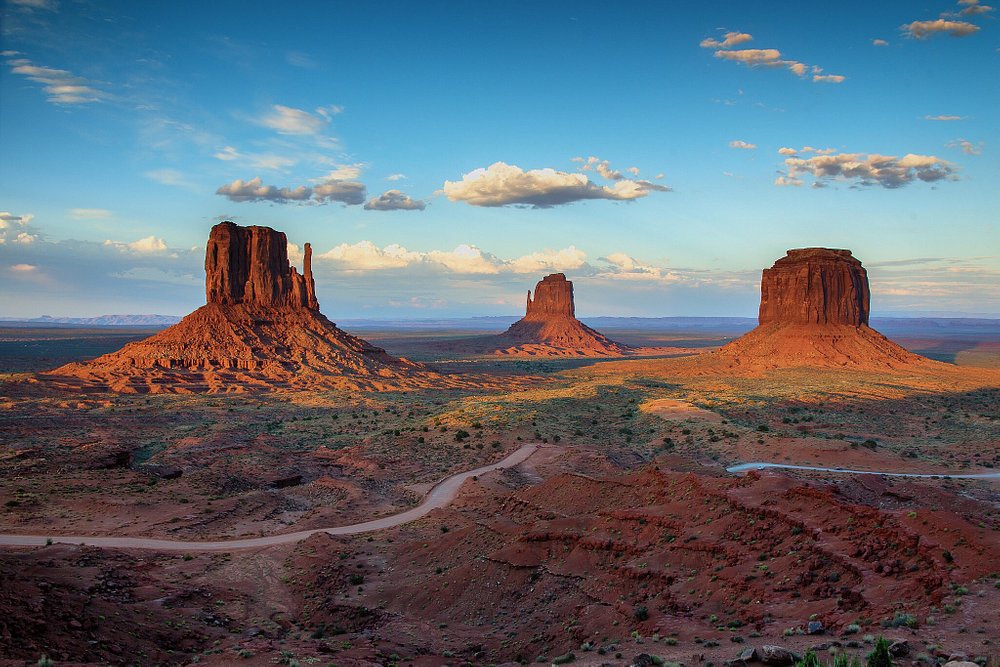
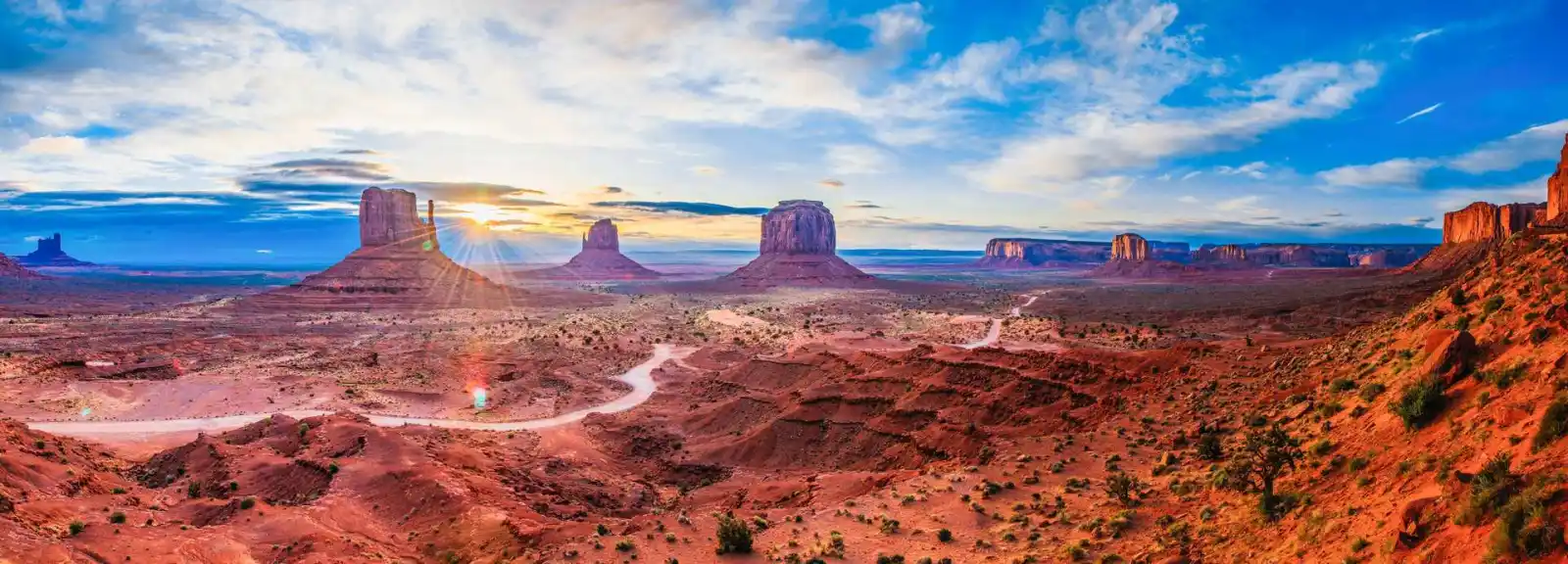
Monument Valley, rising along the Arizona–Utah border, is one of the most iconic landscapes in the American Southwest. Its towering sandstone buttes, sweeping red deserts, and endless horizon were sculpted over tens of millions of years through erosion, wind, and ancient geological uplift. The valley’s most recognizable formations—such as the Mittens, Totem Pole, and the Three Sisters—are the last standing remnants of once-vast plateaus slowly carved down by nature.
Ancient Inhabitants
Long before modern tourism, Monument Valley was home to Ancestral Puebloans (Anasazi), who lived in the region from roughly 1200 BCE to 1300 CE. Archaeological sites—stone dwellings, petroglyphs, and pottery fragments—tell stories of early agriculture, trade networks, and spiritual life connected deeply to the desert.
Following the departure of the Ancestral Puebloans, the Navajo (Diné) people settled in the region between the 16th and 18th centuries. They established a lasting cultural presence, developing farming, herding, and spiritual traditions tied to the valley’s mountains, mesas, and sacred landmarks. Many formations are associated with Navajo stories about creation, protection, and harmony with nature.
Navajo Nation and Cultural Preservation
Today, Monument Valley lies within the Navajo Nation, the largest Indigenous territory in the United States. The valley is not just a scenic attraction—it is a living homeland. Its stories, ceremonies, and traditional practices continue to shape Navajo identity. The Navajo Parks and Recreation Department manages the Monument Valley Tribal Park, ensuring both conservation and community benefit.
Hollywood and Worldwide Fame
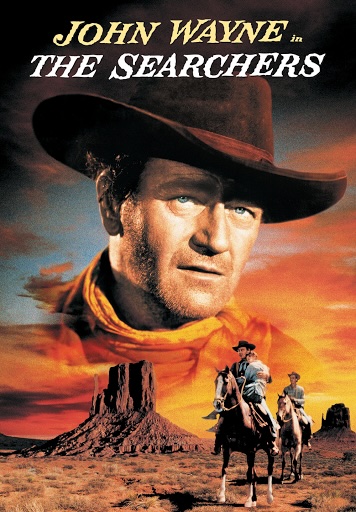
In the 20th century, Monument Valley gained global recognition through classic Western films. Director John Ford famously used the valley as the backdrop for movies such as Stagecoach (1939) and The Searchers (1956), helping craft the visual identity of the American West. And Forrest Gump’s famous scene in Monument Valley is a must-see at mile post 13 on Route 163. Countless films, commercials, photographs, and music videos have since cemented Monument Valley as one of the world’s most iconic landscapes.
Highlights and Must-See Formations
Monument Valley’s scenery is dominated by stunning natural monuments, including:
-
West and East Mitten Buttes (also known as the Mittens) – Twin formations resembling giants waving across the desert.
-
Merrick Butte – Rising dramatically between the Mittens.
-
Three Sisters – A trio of vertical spires seen as three protective figures in Navajo culture.
-
Totem Pole – A slender, needle-like tower revered in Navajo tradition.
-
John Ford’s Point – A viewpoint made famous by Hollywood westerns.
-
Ear of the Wind – A graceful sandstone arch hidden in the backcountry.
Travel Guide: How to Experience Monument Valley
Monument Valley sits along US-163, near the Arizona–Utah border. The nearest major airports are: Flagstaff, Phoenix, Las Vegas. Closest towns: Kayenta (AZ) and Mexican Hat (UT).
Best Time to Visit
| Spring (Mar–May) | Pleasant temperatures, excellent photography. |
| Fall (Sep–Nov) | Cool weather, fewer crowds. |
| Summer | Spectacular but hot; afternoon storms possible. |
| Winter | Quiet, with occasional snow adding dramatic contrast. |
Touring the Valley
The Valley Drive, a 17-mile dirt road, can be explored independently, but the best way to experience Monument Valley is through a Navajo-guided tour, which grants access to restricted areas such as: Mystery Valley, Hunts Mesa, Tear Drop Arch, The Big Hogan, Sun’s Eye Rock Arch.
Guided tours provide cultural interpretation, traditional stories, and access to scenic points not open to the public.
Cultural Etiquette
Because Monument Valley is Navajo land:
- Respect Navajo homes and grazing areas.
- Ask permission before photographing people.
- Stay on designated routes unless with a Navajo guide.
- Do not touch rock art or disturb archaeological sites.
Where to Stay
Options include:
- Monument Valley hotels and cabins near the visitor center
- Traditional Navajo-run lodges
- Campsites with sunrise views
- Nearby towns offering additional accommodations
Photography Tips
| Sunrise | Mittens glowing in golden light |
| Sunset | Long shadows across the buttes |
| Night sky | Monument Valley is a stunning dark-sky location |
| Backcountry | Only accessible on guided tours, ideal for arches and hidden formations |
Recommended Experiences
- A Navajo-guided sunrise or sunset tour
- Stargazing and night photography
- Exploring restricted backcountry areas
- Learning Navajo history and stories directly from local guides
Why Monument Valley Matters
Monument Valley is more than a dramatic desert landscape—it is a living cultural homeland, a place of deep spiritual significance, and a natural wonder shaped by millions of years of earth’s history. Visitors who travel with respect and curiosity gain not only beautiful photographs but also a connection to the Navajo people and their enduring traditions.