Monument Valley Guide: Location, Navajo Nation & Landscape
Monument Valley: Location, Landscape, and Navajo Context
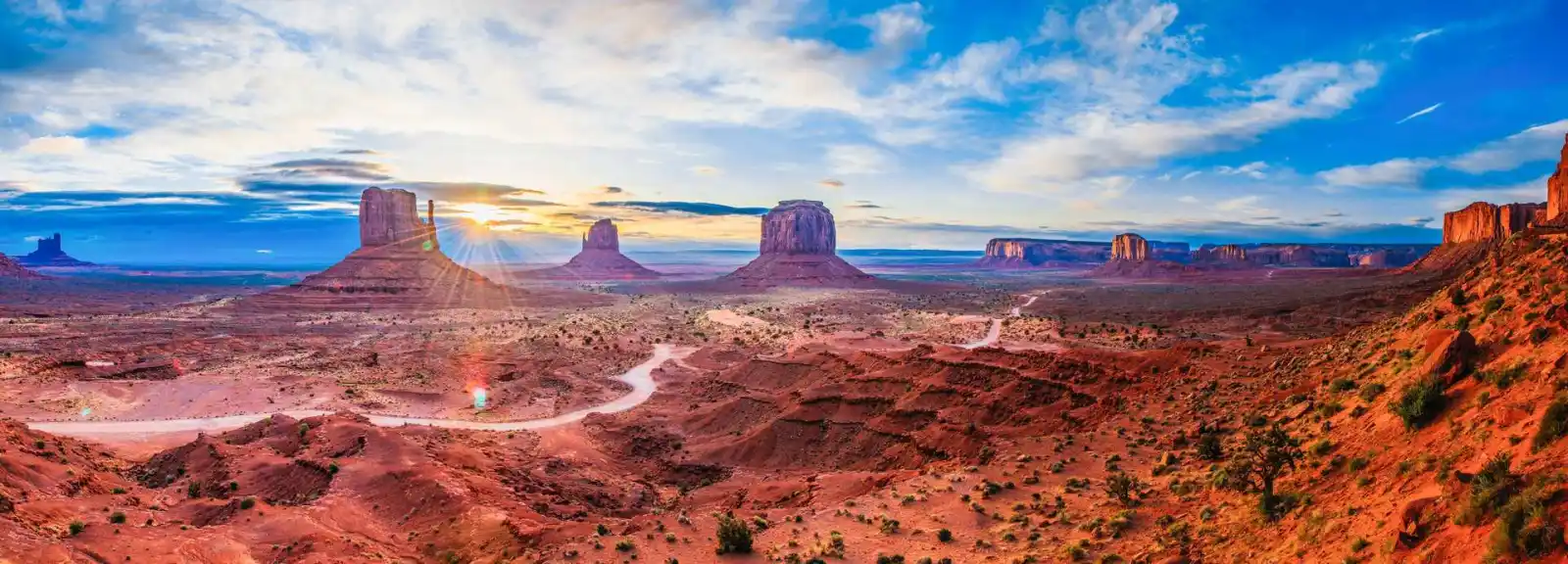
Monument Valley is a Navajo Tribal Park on the Arizona-Utah border, best known for red sandstone buttes such as the Mittens and Merrick Butte. For first-time visitors, the most useful starting point is understanding where Monument Valley is, how the Navajo Nation manages the park, and why the landscape feels different from a typical U.S. national park stop.
Use this page for geographic and cultural context. For tickets, hours, scenic drive logistics, parking, and route planning, see our Visit Monument Valley guide. For Navajo-guided scenic drive, sunset, and backcountry options, compare Monument Valley tours. For a deeper timeline, see History of Monument Valley.
Where Is Monument Valley Located?
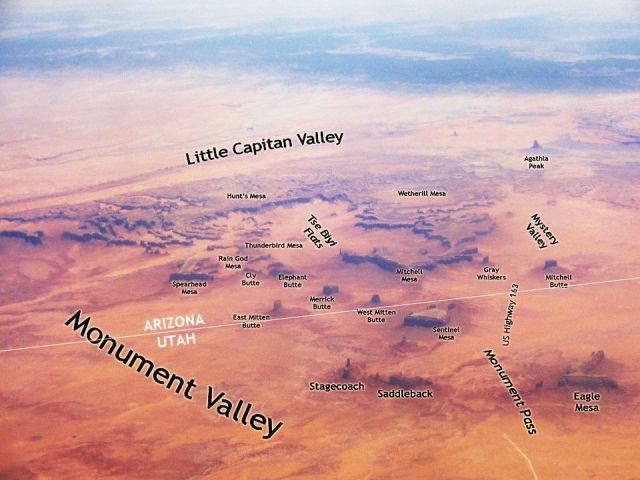
Monument Valley spans the Utah-Arizona border, but the park entrance, Visitor Center, scenic drive start, and most visitor services are on the Arizona side. Travelers typically arrive via U.S. 163 from Kayenta, Arizona or Mexican Hat, Utah, and navigation works best when you search for "Monument Valley Navajo Tribal Park Visitor Center."
Despite crossing two states, the area visitors know as Monument Valley is managed as Navajo Nation land. That affects time zone planning, park rules, entry fees, and access to certain backcountry areas.
Monument Valley and the Navajo Nation
Monument Valley is managed as a Navajo Tribal Park, not as a U.S. national park. For generations, the land has held cultural, spiritual, and historical importance for the Diné (Navajo), and that living connection still shapes how visitors experience the valley today.
In practical terms, that means Navajo park rules apply, some areas require a Navajo guide, and respectful behavior matters as much as sightseeing. The landscape is famous worldwide, but it is also an active homeland with ongoing cultural meaning.
A quick background before you explore the park
Brief Historical Context
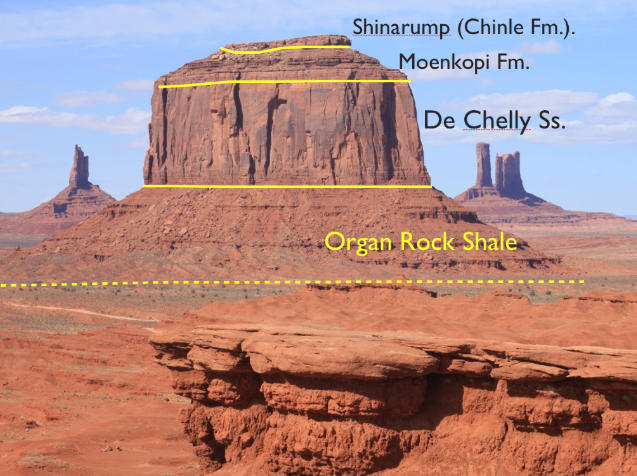
Monument Valley began forming over 300 million years ago when thick layers of sandstone settled in a broad basin. Wind, water, and extreme temperature shifts slowly carved away softer rock, leaving the towering red buttes and mesas that define the valley today. Each formation reflects millions of years of erosion and geological change.
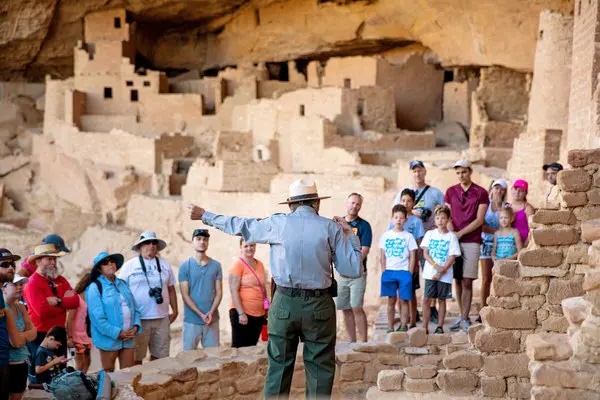
The Ancestral Puebloans were the valley’s earliest known residents, living here from A.D. 1 to 1300 and leaving behind dwellings and rock carvings. The Diné (Navajo) later settled the region, developing a way of life closely tied to the land. Monument Valley remains deeply sacred in Navajo culture and central to their stories and traditions.
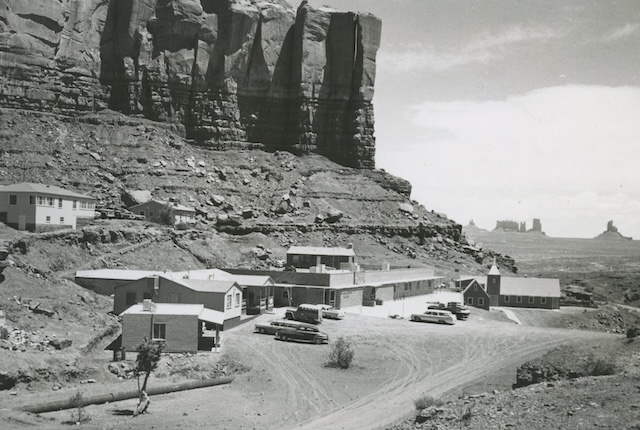
Spanish explorers reached the area in 1776, but Monument Valley stayed remote and little-known until the late 19th century. In 1958, the Navajo Nation established Monument Valley Tribal Park to protect its landscape and cultural heritage. This effort opened the valley to visitors while supporting local Navajo communities.
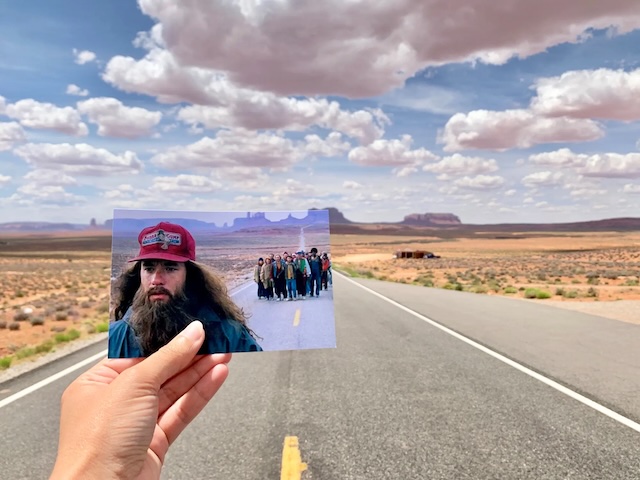
In the 1920s, the Goulding family promoted Monument Valley to Hollywood filmmakers, leading to its debut in Stagecoach (1939). The film’s success made the valley an icon of the American West. Since then, countless movies and commercials—including the famous Forrest Gump scene—have turned Monument Valley into a globally recognized landscape.
The Landscape That Defines Monument Valley
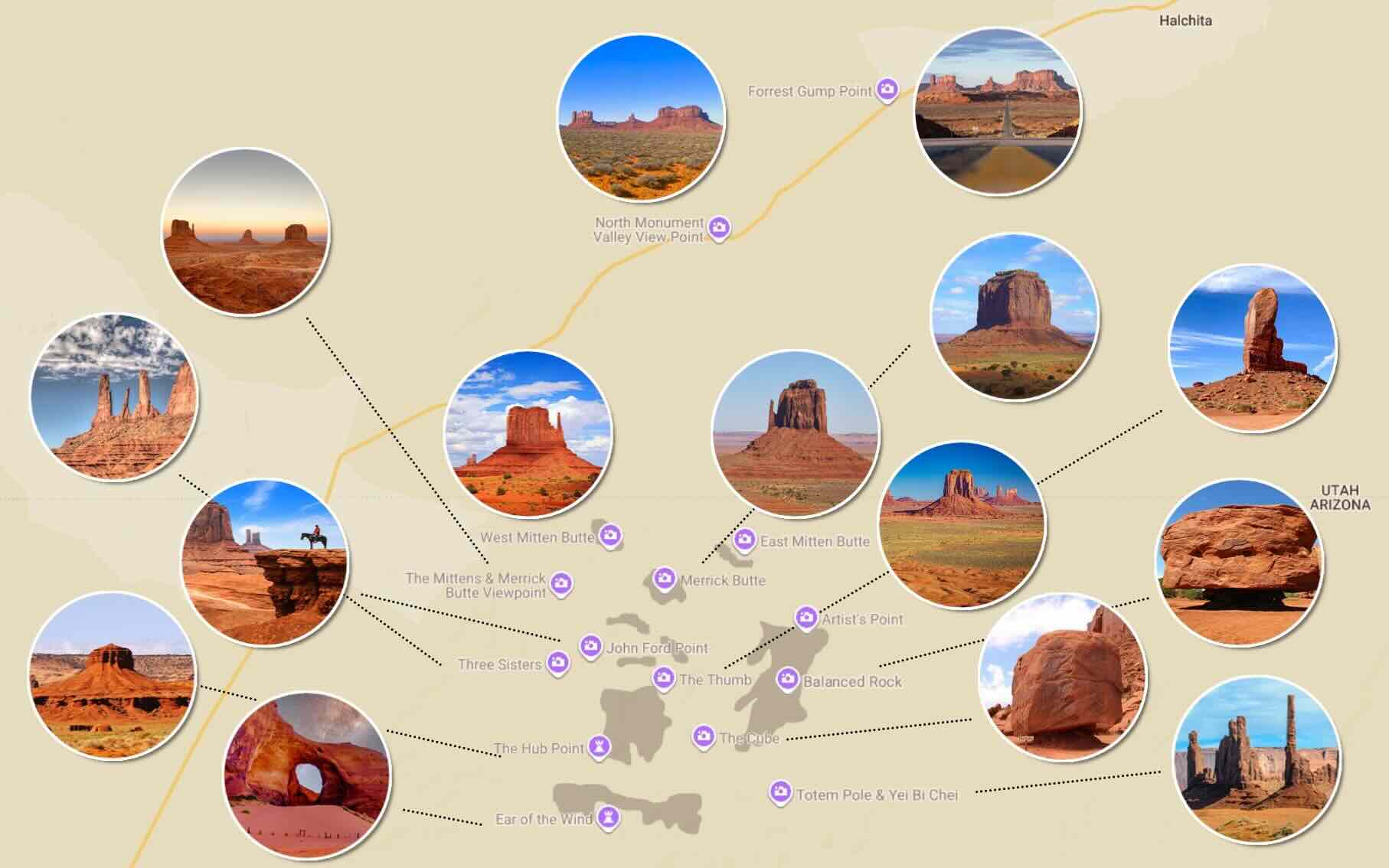
Monument Valley’s defining features are its massive sandstone formations shaped by millions of years of erosion. Isolated buttes rise sharply from the desert floor, creating strong contrasts between sky, stone, and shadow. Famous landmarks such as The Mittens, Merrick Butte, John Ford’s Point, Three Sisters, and Totem Pole each contribute to the valley’s distinctive profile.
These formations are spread across a broad desert plain, allowing for sweeping views that change dramatically with light, weather, and time of day.
Iconic sandstone formations, viewpoints, and trails help define the landscape, cultural identity
Most Iconic Buttes and Scenic Highlights
The Mittens and Merrick Butte
The East and West Mitten Buttes are Monument Valley’s most iconic landmarks, resembling giant mittens when viewed from the south. Rising nearly 1,900 meters, they form a striking triangle with Merrick Butte—a world-famous panorama featured in countless films, photos, and classic “Wild West” imagery.
John Ford’s Point
One of Monument Valley’s most famous viewpoints, named after the director who filmed many classic Westerns here. Overlooking vast red mesas and sweeping desert, it offers a dramatic panorama that perfectly captures the cinematic spirit of the American West.
Three Sisters
A striking formation of three slender sandstone spires rising side by side. Resembling three nuns in long robes, it holds cultural significance in Navajo tradition and is one of Monument Valley’s most recognizable and photogenic landmarks.
Totem Pole & Yei Bi Chei
Totem Pole and Yei Bi Chei form one of Monument Valley’s most dramatic scenes: a slender spire beside towering formations linked to Navajo ceremonial stories, creating a powerful and iconic desert silhouette.
Forrest Gump Point
Located along U.S. Route 163 in Monument Valley, where the highway stretches straight across the desert. It became famous from the film Forrest Gump (1994), offering visitors a scenic spot to recreate the movie’s iconic running scene.
Ear of the Wind
Ear of the Wind is a graceful natural arch hidden in Monument Valley’s quiet backcountry. Shaped by centuries of desert wind, it offers a peaceful atmosphere and beautiful light for photography. This sacred area is accessible only through Navajo-guided tours, ensuring a respectful and immersive experience.
Why Monument Valley Is Unique
What makes Monument Valley truly unique is the combination of scale, symbolism, and cultural continuity. It is not only a place shaped by geology, but a landscape shaped by people, stories, and ongoing tradition. Rather than a preserved relic, Monument Valley remains a living homeland—one that invites visitors to observe, respect, and understand it as more than just a scenic stop.
Monument Valley as a Living Navajo Landscapes
Unlike federally managed parks, Monument Valley is owned and operated by the Navajo Nation. For the Diné people, this land is not simply scenic—it is sacred. Many rock formations are tied to Navajo beliefs, oral traditions, and cultural identity.
Because of this living connection, access to certain areas is limited to Navajo-guided tours. These experiences are not only about sightseeing but about understanding the land through the perspective of those who have lived with it for generations.
Why Monument Valley Looks So Familiar
Even for those who have never visited, Monument Valley often feels instantly familiar. Its dramatic silhouettes have been widely used in films, photography, advertising, and popular media for nearly a century. Over time, these images turned the valley into a global visual shorthand for the American West—open, rugged, and monumental.
Yet no photograph or film fully captures the scale, silence, and presence of the landscape when experienced in person.
How Visitors Experience Monument Valley Today
Visitors experience Monument Valley in several complementary ways. The Scenic Drive offers access to many of the most recognizable viewpoints, while guided tours provide entry to restricted backcountry areas and deeper cultural insight. Short hikes, photography at sunrise and sunset, and overnight stays nearby allow travelers to engage with the landscape at different rhythms.
For those wishing to stay close to the valley, hotel Monument Valley options are limited, with The View Hotel Monument Valley offering unmatched proximity to the formations themselves.
Top Spots around Monument Valley
Learn More About Monument Valley
To explore specific aspects of Monument Valley in greater depth, you may wish to continue with the following guides. Each of these pages offers a deeper look into a particular part of the Monument Valley experience.