Monument Valley Photography Guide
Why Monument Valley Is a Photographer’s Icon
Located within the Navajo Nation along the Arizona–Utah border, Monument Valley is a landscape defined by scale, simplicity, and light. Vast open space surrounds isolated sandstone formations, creating compositions that feel both minimal and monumental. For photographers, this balance between openness and structure offers rare creative freedom.
Unlike locations where scenery competes for attention, Monument Valley strips the frame down to its essentials: land, sky, and stone. As light moves across the valley, shadows stretch and retreat, revealing new shapes throughout the day. The experience rewards patience more than speed, making it a destination photographers often return to again and again.
Best Photography Locations in Monument Valley
The Mittens & Merrick Butte
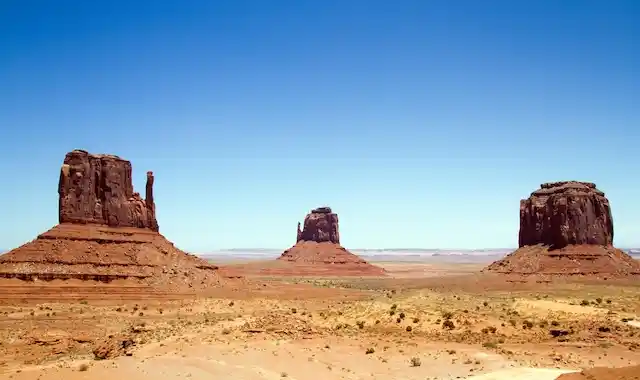
The Mittens are the most recognizable formations in the valley and often the first subjects photographers seek out. Their symmetrical shapes work especially well during early morning hours, when low-angle light adds depth and subtle color variation. The Mittens & Merrick Butte are best approached with a combination of wide-angle lenses for scale and mid-range focal lengths for isolating individual forms.
John Ford’s Point
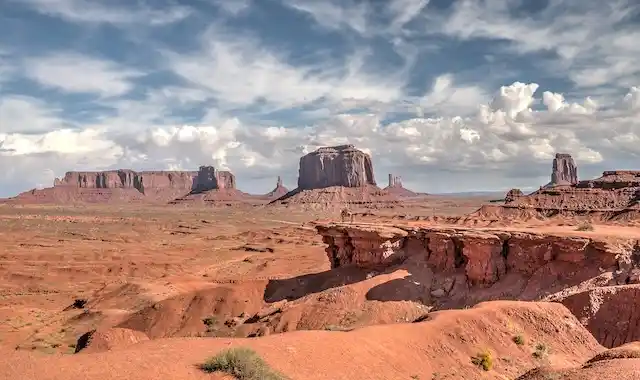
An elevated viewpoint overlooking the valley floor, John Ford’s Point emphasizes distance and layering. From here, formations naturally stack into the frame, making it ideal for compositions that highlight Monument Valley’s vastness. Late afternoon light often produces stronger contrast, especially when clouds are present.
Forrest Gump Point
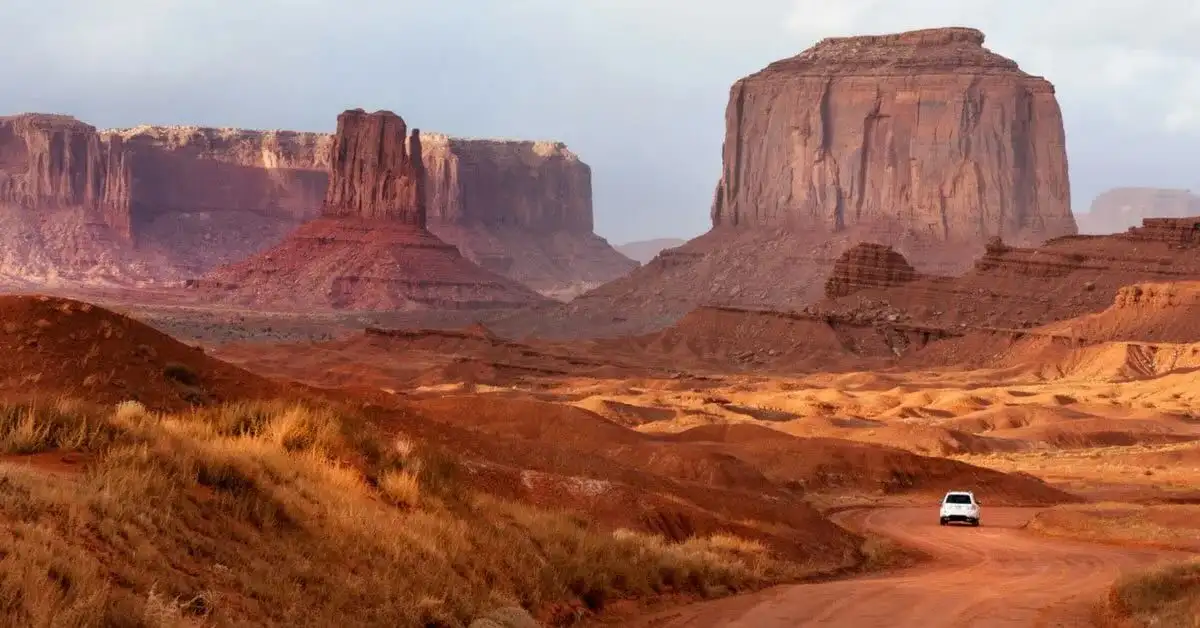
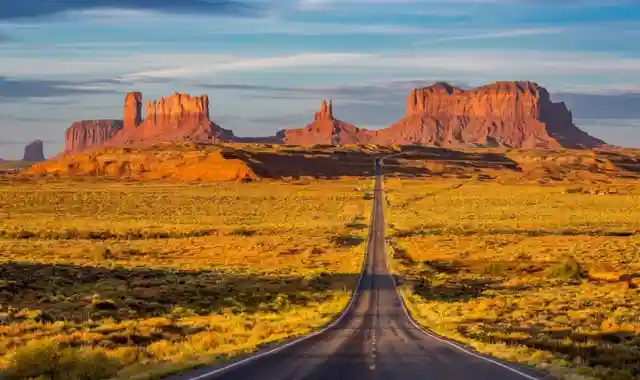
Known for its open approach and unobstructed sightline, Forrest Gump Point offers one of the most direct views into the heart of the valley. The road itself frequently becomes part of the composition, serving as a leading line toward the sandstone formations beyond. Early morning is usually the quietest and most forgiving time to shoot here.
Three Sisters, Totem Pole & Nearby Formations
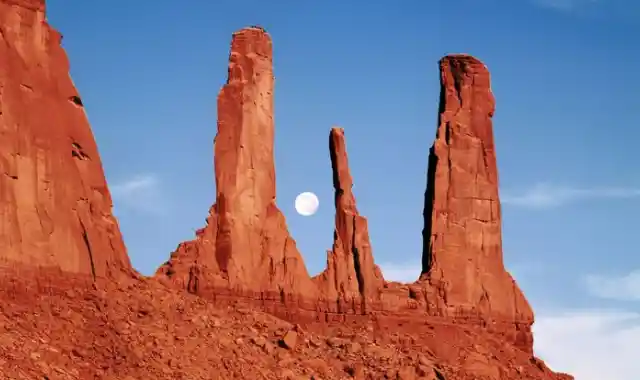
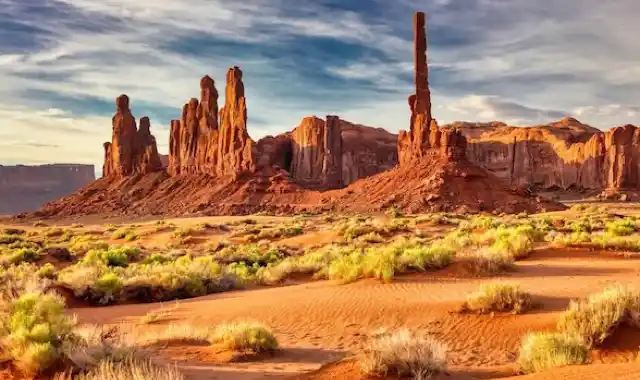
Vertical formations such as Three Sisters and Totem Pole & Yei Bi Chei invite a more focused approach. Longer focal lengths help compress distance and emphasize texture, erosion patterns, and subtle variations in color. Soft or lightly overcast conditions can be particularly effective for these subjects.
Understanding Light: When to Photograph Monument Valley
Light defines Monument Valley more than any single formation. Sunrise brings softer tones and smoother transitions between shadow and highlight, often revealing fine details across the valley floor. The air is typically clearer early in the day, helping preserve depth and contrast.
Late afternoon and sunset emphasize form and structure. As the sun lowers, shadows lengthen and edges sharpen, giving the landscape a sculptural quality. Midday light tends to flatten the scene, but it can still work well for black-and-white photography or when dramatic cloud patterns dominate the sky.
Seasonally, spring and fall offer the most consistent conditions. Summer can produce striking skies but also heat haze and dust, while winter occasionally transforms the valley with snow—rare but visually powerful when it occurs.
iPhone Camera Settings
- Mode: Photo or Portrait
- HDR: Turn ON to balance light and shadow
- Exposure: Tap and hold on bright area → drag exposure slightly down (-0.3 to -0.7)
- Focus: Tap to focus on canyon wall or light beam
- Flash: Off
- Format: Use RAW (ProRAW for iPhone 12 Pro or newer)
- Tip: Hold steady, shoot multiple angles — color changes every few seconds.
Android Camera Settings
- Mode: Pro or Manual Mode
- HDR: ON
- ISO: 400–800
- Shutter Speed: 1/15 – 1/60 sec
- White Balance: 5500–6500K (Daylight to Warm)
- Flash: Off
- Format: Save as RAW (DNG) if supported
- Tip: Use Night Mode for darker corners; keep phone steady for a few seconds.
Practical Photography Tips
Monument Valley’s open environment requires thoughtful preparation. A tripod is useful for low-light conditions and precise framing, while lens protection helps guard against dust and wind. Weather can change quickly, and exposed viewpoints may require extra stabilization.
Longer lenses are often underestimated here. Compressing distance allows photographers to isolate formations and highlight relationships between foreground and background elements that are less apparent at wider angles.
Planning Your Photography Visit
Access within Monument Valley is managed by the Navajo Nation, and certain areas require guided tours. These guidelines protect both the landscape and culturally significant locations while also providing access to viewpoints that are otherwise restricted.
Photography-focused visits benefit from flexibility. Planning around light rather than fixed schedules often leads to stronger results. Before arriving, it’s recommended to review details about planning your visit to Monument Valley, including current access rules and timing considerations.
Photography Etiquette and Cultural Respect
Monument Valley is more than a scenic destination—it is a living cultural landscape. Some areas are sacred and not open to photography. Visitors should respect posted signs, follow guide instructions, and avoid entering restricted areas.
Approaching photography here with awareness and restraint often leads to more meaningful images. Understanding the land’s cultural context adds depth to the experience and encourages a more thoughtful connection with the environment.
Final Thoughts
Photographing Monument Valley is not about collecting images as quickly as possible. The strongest photographs often come from moments of stillness—waiting for light, observing subtle changes, and allowing the landscape to guide the composition.
Whether it’s your first visit or one of many, Monument Valley continues to reward photographers who slow down and look closely. Over time, the valley reveals far more than any single frame can capture.